.png)


NOT QUITE NIGERIAN, NOT QUITE AMERICAN — I’M SOMEWHERE IN BETWEEN
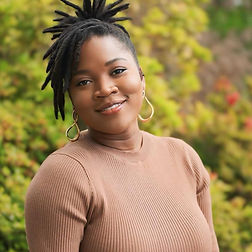
By Adaeze Oputa
When people ask me where I am from, my answer has often been simple: I am Nigerian. For much of my life, I leaned into my Nigerian identity because it was the environment I understood best. Nigeria shapes the way I see the world, my style, my thinking, and even my ambitions.
I was born in Brooklyn, New York, and spent the first five years of my life living with my maternal grandparents. At six, my life shifted across the Atlantic. I moved to Nigeria, where I lived until the end of my secondary school education. My father is Igbo, from Oguta, a riverside town in southeastern Nigeria known for its vast natural lake, the largest in Imo State. My paternal ancestral land is called Umudei, one of the 27 villages that make up Oguta.
My mother is African-American, from Manning, South Carolina, a small town with fewer than 4,000 people, celebrated for its quiet beauty and hospitality. My mother’s family have called Manning and nearby Rembert home for the last four generations, tracing their roots only as far back as the Reconstruction era. Before that, our ancestral story disappears into the historical rupture of the Transatlantic slave trade.

Celebrating with my grandparents
My grandparents on both sides gave me my earliest lessons in culture, family, and belonging. In my early years, Christmas meant returning to my grandparents’ home in Oguta. Their house was always so lively, as it was customary for extended family and community members to greet respected elders shortly after they arrived in the village. During those visits, the house seemed to swell with life. Laughter and loud conversations spilled from room to room as relatives and visitors came and went. Music floated in the background, with the sounds of Osadebe, Nat King Cole, Frank Sinatra, Oliver de Coque mixing with the hum of voices. Plates of food and bottles of drinks never seemed to run out, and there was always someone arriving with a greeting or leaving with a blessing.
“Music floated in the background, with the sounds of Osadebe, Nat King Cole, Frank Sinatra, Oliver de Coque mixing with the hum of voices.”
On my mother’s side, summers in South Carolina had their own rhythm. Mornings often began in the yard, gardening with my grandmother, whose green thumb could bring any plant back to life. I remember kneeling beside her, my hands deep in the earth, while she pointed out which flowers needed trimming, or which weeds needed pulling. My grandfather balanced that stillness with motion, mapping out road trips in his immaculate cherry red Oldsmobile.

The cherry red Oldsmobile
Those drives sometimes stretched hours, but they were always full of laughter, and lots of stories. We would sometimes spend the night in motels, eating boiled peanuts under the moonlight. No trip was ever complete without a visit to my Uncle Lee Van’s rib shack, the smoky sweetness of barbecue clinging to our clothes long after we left. No matter where those road trips took us though, we always returned in time for Sunday service at 11 a.m. at Green Hill Baptist Church, where worship carried a power and presence unlike what I had known in Nigeria.
“That realization came through my journey into Igbo spirituality, where I encountered a powerful truth: the work of knowing oneself begins with knowing one’s ancestors, Ndi Ichie.”
My mother’s African-American/South Carolinian heritage was present but more distant, usually surfacing on our annual summer visits. Only in adulthood, after moving to Canada, did I confront myself with the bitter truth of my abandonment of a whole aspect of my existence. The realization that I had not even taken the time to explore, let alone claim my matrilineage felt like self-betrayal. That realization came through my journey into Igbo spirituality, where I encountered a powerful truth: the work of knowing oneself begins with knowing one’s ancestors, Ndi Ichie. Knowing who they were, what legacies they carried forward to me, and what I am called to carry forward for the next generation, because each of us comes into the world with a purpose that is never ours alone. It is part of a larger thread that connects us to those who came before and those who will come after. For me, understanding my ancestors and the legacies they carried helps me walk my own path with clarity, knowing that my life adds to a story much greater than mine.

Grandpa, my brother and me in South Carolina
“During my university years in South Carolina, I was known as the African girl….In Nigeria, I was the American girl…”
My childhood was a rich tapestry of memories, woven together by culture and family. Also present were the tensions that would surface as I grew older, tensions born from attitudes and stereotypes that even the comfort of food and the joy of music could not bridge. I grew up hearing certain members of my Nigerian family repeat nasty, unfounded stereotypes about African-Americans, saying they were lazy or lost, without any real knowledge of who they were or any understanding of their history and lived realities. Those stereotypes were painful to hear, and they became the labels I carried when I crossed borders. These fractures became more personal as I grew older.
"I grew up hearing certain members of my Nigerian family repeat nasty, unfounded stereotypes about African Americans, saying they were lazy or lost, without any real knowledge of who they were..."
During my university years in South Carolina, I was known as the African girl. At my HBCU, my accent and wardrobe, often ankara pieces, marked me as different. Although I accepted the label, it kept me on the edge of belonging. I chose not to immerse myself in campus traditions or in learning African-American history because, at the time, I did not feel it was mine to claim. I saw myself as Nigerian and believed the only value I could take from that space was the degree it offered me. Looking back, I see how limiting that was, and how much I missed by not allowing myself to be shaped by the richness of history and culture that surrounded me. The stories of resistance, the legacy of excellence, and the shared sense of identity that connected generations of students who had walked those same halls before me.
“To this day, I hesitate to speak Igbo outside my home, except with my husband, who embraces my imperfect attempts and is a gentle teacher.”
Interestingly, my Nigerian experience was not much different. In Nigeria, I was the American girl- ajebota is the more popular term. My Igbo was never considered authentic, and any attempts to sing or speak drew laughter. My mother did not speak Igbo, and my father who was fluent in Igbo, did not speak it to us at home, so the only exposure I had came from school or visits to my grandparents. In school, Igbo was taught as a subject, and often in a standardized central dialect that was different from the indigenous Igbo of Oguta people. What might have flourished in an encouraging home environment was instead stifled by mockery from peers and relatives, many of whom took for granted the language they had grown up speaking. That ridicule pushed me to the margins of the experience. To this day, I hesitate to speak Igbo outside my home, except with my husband, who embraces my imperfect attempts and is a gentle teacher.
Looking back, I see how these labels narrowed my sense of belonging, making it easier to hold back from fully exploring either culture. Still, there is an Igbo proverb that says, “mgbe onye ji tete bu ụtụtụ ya,” meaning, "it is when a person wakes up, that it is their morning." For me, the morning came in adulthood, when my spiritual journey led me to reclaim both of my lineages.

A gathering in my Grandfather’s compound in Oguta during the festive season
Life in Canada was never in my plan. My boyfriend at the time, now my husband, lived there and was convinced that starting our lives away from the uncertainty of Nigeria was the best path forward for us as a new family. After only a few years of resettling in Nigeria following university and graduate school, I made the difficult decision to leave once again and begin a new life in Canada. It felt like entering a new chapter of displacement, foreign in every sense, and somehow, over time, it became a place of belonging.
“...the isolation of immigration grief felt like old wounds resurfacing.”
Migration coincided with other life transitions: marriage, new motherhood, and a heavy handed sprinkle of postpartum depression. I was almost half way through my pregnancy when I arrived in Canada in the dead of winter. That December, the snow fell heavily and the cold settled into my bones. For someone who gravitates toward warmer climates, the season felt like a shock to my body. And the shocks kept coming, not just from the weather but from the disorientation of starting over in a new country while navigating the fragile season of early motherhood. It was a paradox: I had moved to a place of extraordinary natural beauty, yet my personal experience was marked by a heaviness that felt unrelenting. What I wanted more than anything was the closeness of family and the comfort of communal care, especially in those early months with my newborn. I wanted to experience omugwo, to have my mother cook for me, to press and bind my stomach, to reassure me. Not having that experience made the absence of family even more pronounced. I thought of my grandmother in South Carolina, who had spent years as a midwife and carried deep knowledge of ways of caring for women after birth. She shared what she could with me over the phone, but it could never replace her presence. In those sleepless nights, I felt how much is lost when culture and the care of family cannot travel with you.

In a motel with my grandmother in South Carolina
At first, the isolation of immigration grief felt like old wounds resurfacing. Once again, I was on the outside. But finding and creating community became my medicine. Through my work with the African Friendship Society, a nonprofit dedicated to preserving and sharing African cultures in Canada, I began to reconnect with the familiar rhythm of collective care. Within the organization, I helped nurture programs like MoRhyCo, which centers the wellness of Black women through movement, rhythm, and community connection.
"Canada became a kind of neutral ground where, for the first time, I could hold all my identities together in a way that nurtured me back to life."
The work allowed me to contribute to something larger than myself while also being restored by it. It was through these experiences, and through the wider circles of community I have been part of, that I began to feel whole again. Canada became a kind of neutral ground where, for the first time, I could hold all my identities together in a way that nurtured me back to life.

MoRhyCo women’s group gathering
Some days I find myself listening to highlife music, other days to old Black spirituals. Sometimes Nollywood fills the living room, other times Tyler Perry movies. This blending has been liberating. For the first time, I can live in the fullness of my heritage without fracture. I embraced this integration with open arms, knowing it was not only for me but also for my son, who carries strong Igbo lineage. Though he is growing up in Canada, his DNA, story, and spirit are rooted elsewhere. Preserving those roots is not optional.
“Living in the diaspora has shown me that community makes survival possible.”
I remember reading a UNESCO report that identified Igbo and some other African languages as vulnerable and at risk of becoming endangered. The idea that the language of my ancestors, carried for centuries, could vanish deepened my regret for not yet being able to speak Igbo fluently. This is not the reality I want for my child. Already, he is learning by living: learning Igbo from his father and I, eating Nigerian food, watching Nollywood movies with his grandmother, attending cultural immersion camps where griots blend stories with music under the moonlight. He looks forward to attending our local Iwa Iji festivals, where he gets to see the masquerades, all here in British Columbia. This is how we carry culture forward, through lived, embodied experiences.
Living in the diaspora has shown me that community makes survival possible. It allows us to hold onto culture, language, food, and traditions even far from home. Community has been my anchor in Canada. Through community, I have experienced the healing of being seen and cared for. I finally have space to pour out my struggles and find restoration. These experiences have been a kind of medicine, helping me recover from postpartum depression, loneliness, and disconnection.
For me, home is wherever my family feels safe and comforted, not a place on a map. I did not always have that stability as a child, but I have built it now, and I see my son thriving in it. And when future generations look back, I hope they will remember me as an ancestor who upheld community, who lived with purpose, and who left behind a legacy of connection and belonging.
“In the end, what sustains us in the diaspora are the practices we choose to keep alive.”
To other Africans in the diaspora, especially mothers raising children abroad, I say this: do not let isolation fool you. Growth happens in solitude, like a seed pushing upward through soil. Root your children in culture. Lean into community. Question the idea that progress means distancing yourself from people who look like you. We are communal beings, and we thrive in communities that understand our cultural context.
In the end, what sustains our culture in the diaspora are the practices we choose to keep alive. The continuity of language, food, and traditions shapes the future. It is the small daily acts that matter most: stirring a pot of egusi on the stove, listening to a story told by the fire, hearing a grandmother speak Igbo to her grandson…. these are the threads that hold us together across generations.

Adaeze Oputa-Anu is a community architect and cultural educator based in British Columbia. In her work, she creates pathways to belonging, economic mobility, and leadership for Black women, girls, and immigrant communities. Her programs are rooted in healing, culture and capacity-building, addressing systemic gaps while restoring voice, agency, and connection for those often pushed to the margins. Born in Brooklyn, raised in Nigeria, and shaped by the complexities of moving between continents, Adaeze brings a deeply diasporic lens to everything she builds. Her work is informed by the tension and beauty of living in multiple worlds, drawing from Igbo heritage, Black womanhood, and the lived experience of navigating identity across Nigerian, U.S. and Canadian landscapes. This cultural grounding guides her commitment to designing spaces where people can reclaim narrative, rebuild confidence, and access opportunities with dignity. As Executive Director of the Vancouver Eastside Educational Enrichment Society, she co-created and works on the frontlines of the EMPOW3R program, supporting hundreds of immigrant women survivors of violence, in securing skills, work experience, and long-term stability. She also leads the Empowered Black Girl initiative with Black Women Connect Vancouver, creating affirming environments that nurture the brilliance and emerging leadership of Black girls.
IG: @msoputa
LinkedIN: https://www.linkedin.com/in/jannetteao


Comments